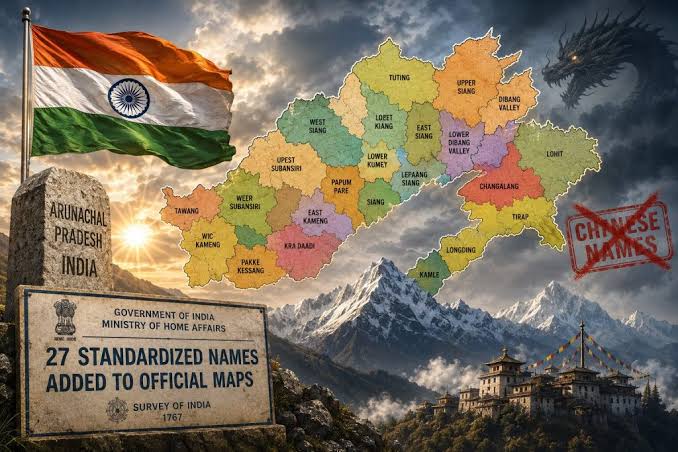
India has formally named 27 geographic locations, including mountain passes, lakes, and monuments, in Arunachal Pradesh on its official maps in response to China’s repeated unilateral standardization efforts in the border region. This counter-move drew sharp pushback from Beijing, which accused New Delhi of complicating border negotiations and disrupting recent momentum in bilateral discussions. Despite Beijing’s statements, Indian authorities reiterated that Arunachal Pradesh remains an integral and inalienable part of India, asserting full sovereign rights to designate geographic features within its territory. Beyond border diplomacy, domestic focus remains heavily fixed on severe monsoon conditions that continue to disrupt lives across multiple regions. Severe flooding in Assam has impacted nearly 1.4 lakh residents across 14 districts, pushing the regional death toll to 100 as rescue teams deploy emergency relief across affected river basins. Concurrently, the National Capital Region experienced heavy downpours that forced the Delhi government to monitor rising Yamuna water levels after the capital surpassed its full August average rainfall within the first eight days of the month alone. Heavy rains and landslides also led to the temporary suspension of the annual Amarnath Yatra in Jammu and Kashmir due to safety risks along high-altitude pilgrimage routes. Meanwhile, legislative and economic policy debates gained momentum following the passage of the Taxation and Other Laws (Amendment) Bill, 2026 in Parliament, which prompted administrative clarifications ensuring zero fees for retail Unified Payments Interface (UPI) users while evaluating nominal merchant charges. In parallel, state law enforcement agencies across Uttar Pradesh, Bihar, and Maharashtra maintain heightened vigil over civil safety and infrastructure projects amid ongoing public discussions regarding employment reforms, administrative transparency, and national development goals.
Diplomatic Tensions Escalate as India Counter-Names Arunachal Pradesh Locations While Monsoon Impact Deepens Across North and East India